How to Identify At-Risk Customers by Building Multiple Champions
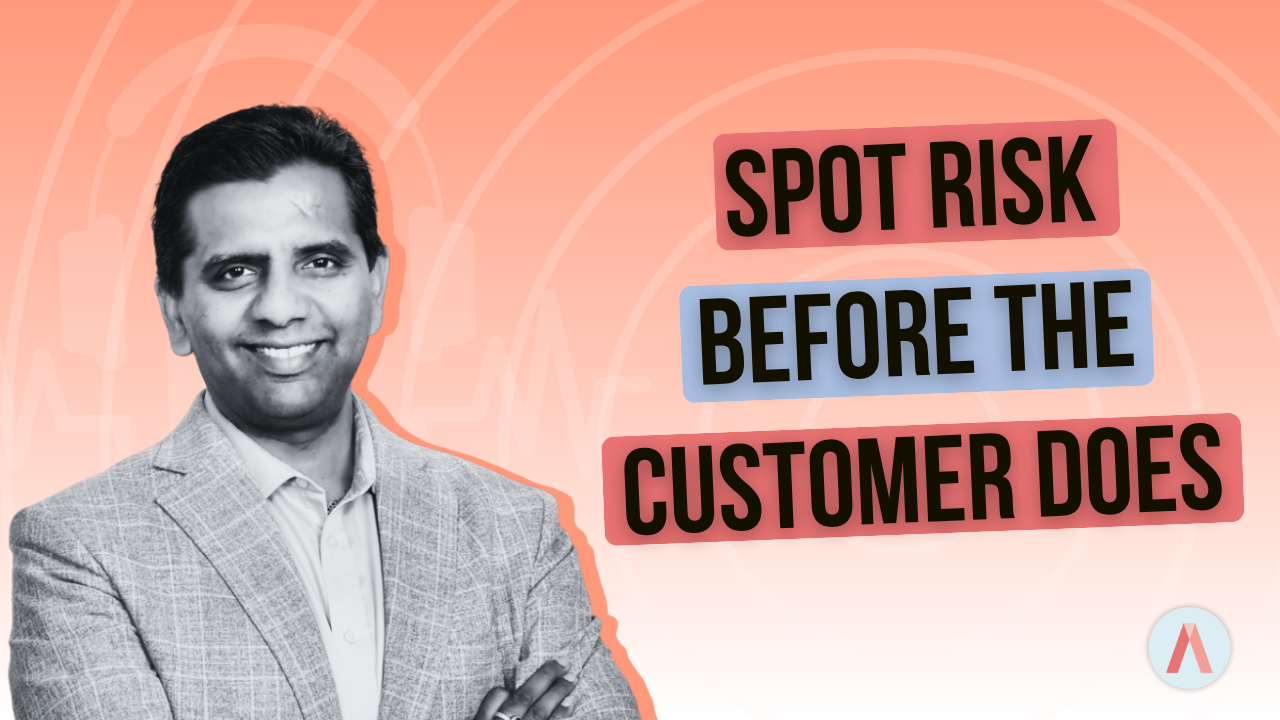
Most churn doesn’t come out of nowhere. The signals were there, and nobody caught them in time. If you want to know how to identify at-risk customers before they tell you there’s a problem, Ramesh Chitor has a framework built for exactly that.
Ramesh is the Chief Customer Officer at TrustModel AI. He joins Alex Raymond on Account Management Secrets to make the case that account management is really risk management wearing a friendlier hat. He walks through the TRUST framework his team uses and explains why a green customer health score can still hide a customer who is about to leave. He also shares a story about a large bank whose audit caught his team off guard, and the lesson he took from it.
Alex and Ramesh get specific about early warning signs of churn. What does it mean when there’s no energy in a deal? Why does relying on one champion put your renewal risk in someone else’s hands? Ramesh makes a strong case for multithreading in customer success and shares the question he asks his champion before every key stakeholder meeting. He also opens up about how to build a customer success team from scratch at an early-stage company and what changes as the customer base grows.
Listen now if you want fewer surprises in your portfolio and a clearer read on how to identify at-risk customers while there’s still time to act.
Episode Breakdown:
00:00 Account Management as Risk Management
03:55 The TRUST Framework for Customer Success Teams
08:24 How to Earn Trusted Advisor Status
10:07 Why Scripted Voice of Customer Questions Backfire
11:17 Agentic AI and Overloaded Customer Portfolios
17:01 Customer Health Scores and the Bank Audit Lesson
20:50 How to Identify At-Risk Customers Through Multiple Champions
25:12 Reading the Energy Around a Renewal
27:10 Building Post-Sales From Scratch at Trust Model AI
35:05 Hiring Fast Learners for the Future Team
Connect with Ramesh Chitor:
Connect with Ramesh on LinkedIn
Visit the TrustModel.ai website
Connect with Alex Raymond:
Podcast production and show notes provided by HiveCast.fm
Go deeper:
The Risk Register — Complete GuideRelated episodes
Listen to The Growth Department for Free